

Cloud Migration Insights & Guides
Moving workloads from on-premises data centers to Amazon Web Services is one of the most consequential decisions a technology organization can make. The right cloud migration cuts infrastructure spend while unlocking elastic capacity for your engineering team. A rushed lift-and-shift, on the other hand, can lock you into higher operating costs and technical debt that takes years to unwind.
The articles below cover the full lifecycle of an AWS migration. You’ll find workload assessment and business case development, target architecture design, database migration strategy, application refactoring choices, cutover planning, and post-migration cost optimization. Whether you’re evaluating a first pilot workload or planning a multi-year modernization roadmap, these resources walk through the technical and organizational decisions our team helps clients work through every day.
Stratus10 is an AWS Advanced Consulting Partner with deep experience across the AWS migration toolchain, including Application Migration Service, Database Migration Service, Migration Hub, and the Migration Acceleration Program. If you're planning a migration and want an outside perspective on strategy or a hands-on partner to execute it, our Cloud Migration services team is the fastest way to get a defensible plan grounded in your specific workloads and business context.
AWS for Financial Services: A Cloud Migration Guide
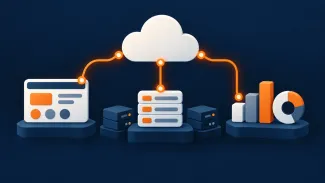
Financial services firms face a difficult technology mandate: improve digital products, make data more useful, and create room for AI while maintaining the resilience and control expected of critical financial systems. Aging infrastructure can slow that work, but cloud migration changes more than the location of an application. It changes how teams manage access, deploy software, recover services, and produce evidence that controls are working.
Ecommerce Migration to AWS: A Technical Leader’s Guide
How to move to the cloud without disrupting sales
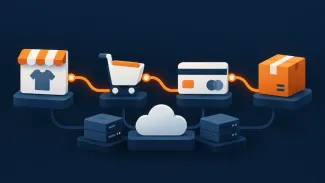
For ecommerce companies, pressure to improve digital experiences, absorb unpredictable demand, and launch new capabilities faster is exposing the limits of legacy infrastructure that wasn't built for the way the businesses now operate and sell.

AWS for Manufacturing: Cloud Migration and Modernization
For manufacturers, pressure to increase productivity, respond faster to supply chain disruptions and changing customer demand, and make greater use of operational data, automation, and AI is exposing the limits of aging on-premises infrastructure and driving migration to AWS.
Cloud Migration & Modernization: A Strategy Playbook for Executives
Explore essential cloud migration and modernization strategies. You'll learn:
Why most cloud migrations fail and common pitfalls to avoid
A practical framework for migration and modernization that works across AWS and Azure

AWS Cost Calculator: A Quick Guide to Estimating Your Cloud Costs
Looking to estimate your AWS costs accurately?
The AWS Cost Calculator helps you plan your budget and avoid unexpected expenses.
This guide will teach you how to use the calculator, from setting up your first estimate to utilizing advanced features. Get ready to take control of your cloud costs.
Key Takeaways

Common Mistakes and Pitfalls of Devising a Cloud Strategy
Devising a robust cloud strategy is crucial to leverage the benefits of cloud computing. However, several common mistakes and pitfalls can derail your efforts, leading to increased costs, security risks, and operational inefficiencies. This comprehensive guide highlights these pitfalls and offers insights on how to avoid them, ensuring a successful cloud journey.
Controlling Data Center Costs with a Hybrid Cloud Strategy
Unlocking Cost Efficiency: Strategies for Balancing Data Center Expenses with Hybrid Cloud Solutions
Many small and midsize businesses (SMBs) struggle to keep IT infrastructure costs under control. Data centers, with their hefty hardware, software, and maintenance needs, can quickly become a budget black hole.

Use Case Comparison: DigitalOcean and AWS
Overview of DigitalOcean Compared to AWS
DigitalOcean and AWS are both cloud computing providers that offer services such as virtual machines, storage, and databases. DigitalOcean focuses primarily on virtual private servers (VPS) for hosting web applications and is best known for its simple web interface. AWS’ comprehensive and feature-rich platform offers a wider range of services including computing, machine learning, and analytics, and has an ecosystem of partners spanning their global infrastructure.

An Overview of Data Lakes, Use Cases, and Corresponding Tools on AWS
SMBs are increasingly leveraging data lakes for advanced and real-time analytics
A data lake is a centralized repository that allows businesses to store structured and unstructured data at any scale. It provides a single source of data that can be analyzed and used to support a variety of business needs, such as reporting, analytics, machine learning, and more.